About Us
Who we are?
Logistics UK is one of the biggest business groups in the UK, supporting, shaping and standing up for efficient logistics. We are the only business group in the UK that represents all of logistics, with members from the road, rail, sea and air industries, as well as the buyers of freight services such as retailers and manufacturers whose businesses depend on the efficient movement of goods.
Why do we exist?
An effective supply chain is vital to Keep Britain Trading, directly impacting over 7 million people employed in making, selling and moving the goods that affect everyone everywhere.
With Brexit, technology and other disruptive forces driving changes in the way goods move across borders and through the supply chain, logistics has never been more important to UK PLC.
What do we do?
As champions and challengers, Logistics UK speaks to Government with one voice on behalf of the whole sector, greatly increasing the impact of our messages and achieving amazing results for members.
Representation – representing the business needs of the logistics industry to government at local, national and European level across road, rail, water and air, as well as the buyers of freight services such as retailers and manufacturers whose businesses depend on the efficient movement of goods.
Campaigning – Logistics UK campaigns are designed to highlight matters of strategic and commercial concern for our members; from climate change to Brexit, from rail freight costs, to issues around the 3rd London airport, from UK fuel duty to HGV driver shortages.
Compliance – Logistics UK inform and prepare members for the latest compliance requirements thus reducing risk and regulatory exposure.
Training – Our training courses improve the skills and knowledge of logistics professionals throughout the industry.
Advice – Logistics UK use the data and knowledge that we accumulate, to counsel and advise members on matters both strategic and operational. Go to Compliance and Advice
Logistics news – the Logistics UK media centre is bustling with news about the latest developments across all modes, and our resident experts are on hand to interpret developments and their impact on members and the sector at large.
Our members
Our members represent a large cross-section of the industry including hauliers, suppliers, retailers, local authorities, freight forwarders, freight handlers, vehicle manufacturers and others.
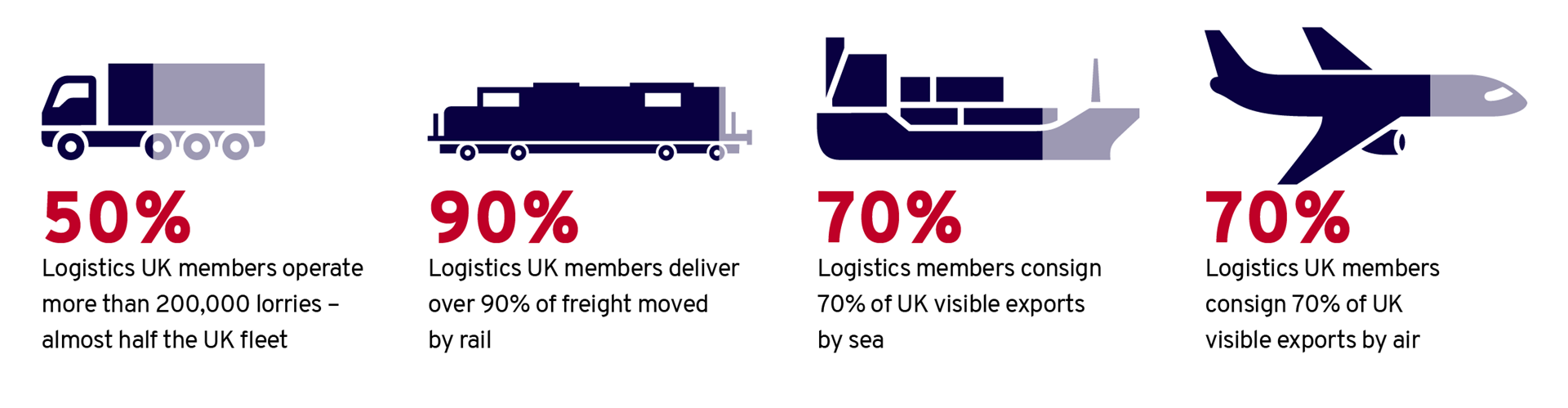
Logistics UK membership gives you…
A voice – the ability to have influence around policy developments that might affect you, your sector and your business.
Information – stay ahead of modal trends and issues, information about compliance and regulatory changes.
Cost saving – discounted essential operating services and partner offers mean that your business can save money through membership of the Logistics UK.
Find out more on Logistics UK Membership
Annual Report
View Logistics UK's Annual Report
Unsure? We can help
Choose from a range of ways to get in touch and we can guide you through your queries
Get in touch
